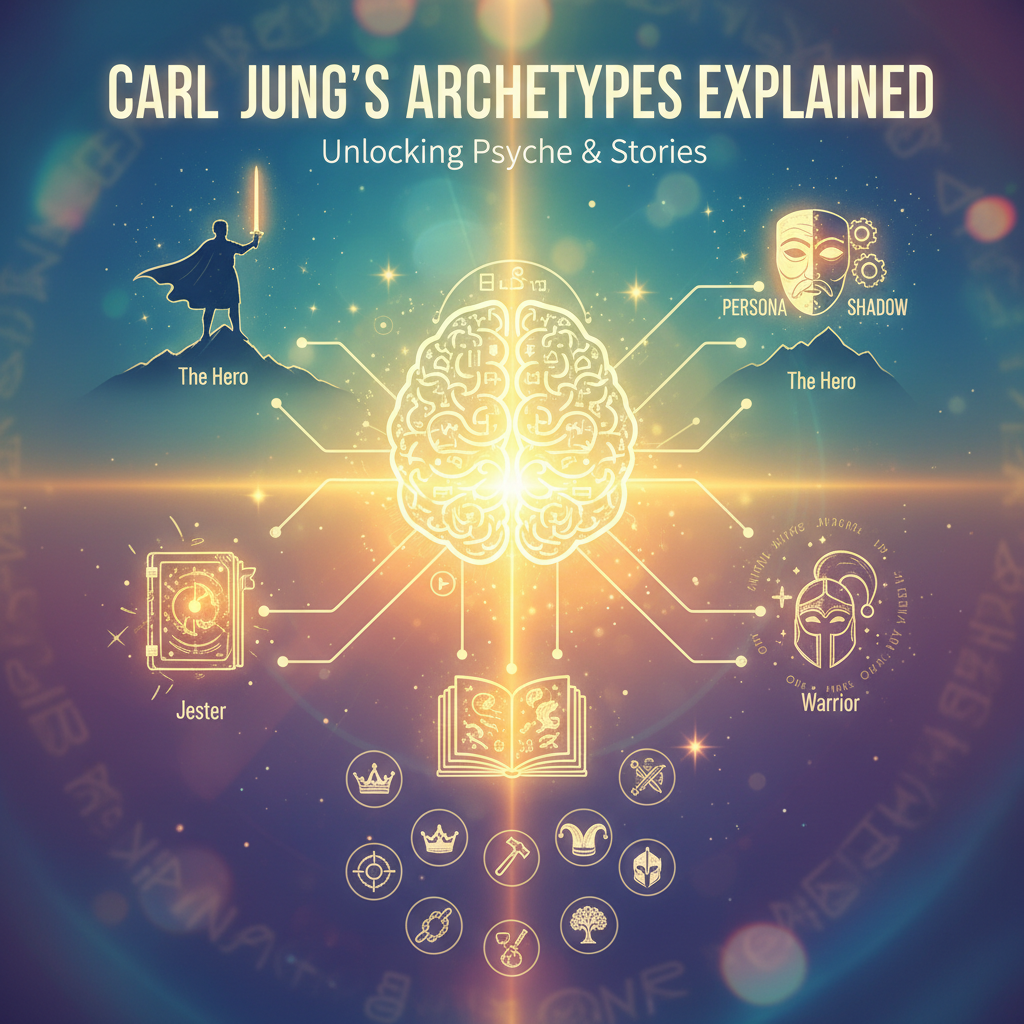
Carl Jung’s Archetypes Explained: Unlocking the Universal Language of Your Psyche & Stories
The stories that captivate us most, from Star Wars to Harry Potter, often rely on an invisible psychological code. This code consists of universal characters and plots we instantly recognize, a language we instinctively understand without ever being taught. The wise mentor, the brave hero on a perilous quest, the rebellious friend – these figures reappear consistently, speaking to something fundamental within us.
This profound phenomenon fascinated Swiss psychiatrist Carl Jung. He viewed these recurring patterns not as mere coincidence, but as the fundamental building blocks of the human mind, which he termed archetypes.
This article provides an accessible explanation of Jung’s powerful theory. We will explore what Jungian archetypes are, where they originate, and how recognizing them can help us better understand not only the narratives we love but also the intricate workings of our own minds. By the end, you’ll gain a new lens through which to perceive yourself and the world around you.
1. What Are Jungian Archetypes? The Universal Blueprints of Human Experience
At its core, an archetype is a universal, inborn model of a person, behavior, or personality that profoundly influences human experience. Think of it as a psychological “blueprint.” Just as the specific details of a house can vary (paint color, furniture style), the underlying blueprint for a “house” (walls, a roof, doors) remains consistent. Archetypes function similarly for human experience.
Carl Jung famously rejected the popular theory of tabula rasa (“blank slate”), which proposed that humans are born without any built-in mental content. Instead, he argued that we are all born with a shared foundation of universal human experiences such as love, fear, belonging, and death. In this view, archetypes are a form of psychological instinct – patterns shaped by millions of years of experiences common to our ancestors. They are the psychic forms these experiences take.
It’s crucial to distinguish archetypes from stereotypes, which are often confused:
| Archetype | Stereotype |
|---|---|
| A deep, universal pattern providing a flexible blueprint for a character or experience. | A simplified, overgeneralized belief about a particular group of people. |
| Resonates on a fundamental, psychological level. | Often superficial and can be limiting or offensive. |
With this foundational understanding of what archetypes are, let’s delve into where Jung believed these powerful patterns originate.
2. The Collective Unconscious: Where Do Archetypes Reside?
Jung proposed that the source of all archetypes is the collective unconscious. He defined this as a shared, inherited structure among all people, comprising inherent brain patterns for thinking about certain things, along with latent memories passed down from our earliest ancestors. It contains our species’ entire evolutionary history.
To make this concept more relatable, you can envision the collective unconscious as the “collective dream” of humanity. Just as your personal dreams draw from your individual life experiences, the collective unconscious is a vast repository of images, themes, and symbols from our shared human story.
According to Jung, this ancient, shared psychic layer is the fertile ground from which all archetypes emerge. They are the universal characters and situations that populate this collective dreamscape. This explains why the same basic myths, character types, and symbolic representations can be found in cultures across the globe that had no direct contact with one another.
With this understanding of their origin, we can now turn to where these archetypes manifest most clearly in our lives: in the stories we tell and the people we are.
3. Jungian Archetypes in Action: Stories, Self & Society
Archetypes are not merely abstract psychological theories; they are active forces that we can observe and feel all around us. They are most visible in the stories we tell, but they also represent the different parts of our own personalities.
3.1. Archetypes in Stories: The Hero’s Journey and Beyond
Modern movies, literature, and even video games function as contemporary forms of myth-making, and they are rich with archetypal characters and plots. These stories resonate so deeply with us precisely because they tap into these universal patterns from the collective unconscious.
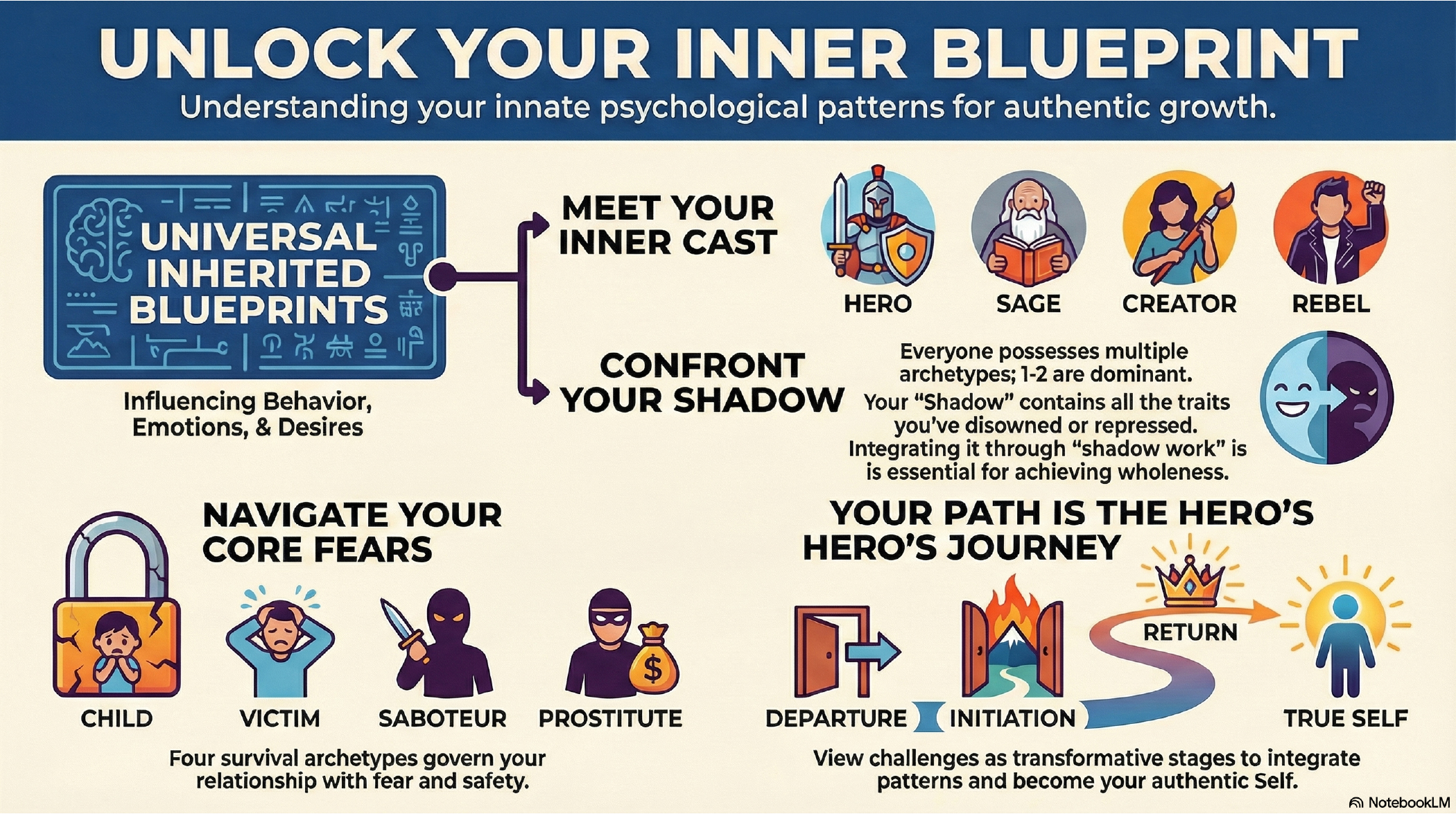
The most famous archetypal story structure is The Hero’s Journey. This universal narrative follows a predictable pattern of growth and transformation, often in three core stages:
- Departure: The hero leaves their ordinary world after receiving a call to adventure.
- Initiation: The hero faces trials, enemies, and challenges, often with the aid of a mentor or other helpers, leading to personal growth and transformation.
- Return: The hero comes back to their world, bringing newfound wisdom or a gift to share with their community.
We see this exact pattern in the journey of Luke Skywalker in Star Wars and Frodo Baggins in The Lord of the Rings. Both leave their simple homes, confront immense evil, and return forever changed. These stories also feature another powerful archetype: the Wise Mentor. Figures like Dumbledore in Harry Potter and Gandalf from The Lord of the Rings embody our collective idea of a wise elder, providing the hero with guidance, wisdom, and the tools necessary for success.
3.2. Personal Archetypes: Understanding Your Persona and Shadow
Beyond our stories, archetypes also represent the different “subpersonalities” or parts that make up our own psyche. Jung identified two fundamental archetypes central to our personal identity:
- The Persona: This is the “social mask” we wear to present ourselves to the world. The word comes from the Latin term for an actor’s mask. It’s the role we play to fit into society and navigate different social situations. For example, a father may adopt a disciplining and sober persona when in his role as a parent, which may differ significantly from his inner self.
- The Shadow: This is our “darker side.” It contains all the parts of ourselves that we hide, repress, or refuse to acknowledge – our fears, insecurities, and unacceptable desires. The Shadow is not inherently evil, but it holds the aspects of our personality that we deem negative. The literary character of Dr. Jekyll’s evil alter ego, Mr. Hyde, is a perfect representation of the Shadow breaking free from repression. Jung argued that true psychological maturity comes not from defeating this darker side, but from consciously acknowledging and integrating it into the whole personality.
While the Persona and Shadow form the core of our personal psychological structure, they are just two of many universal characters that populate both our inner and outer worlds.
4. Exploring 12 Core Archetypes: A Gallery of Universal Characters
While Jung identified numerous archetypes, a set of 12 primary “characters” has been popularized in modern fields like branding, literature, and psychology. This framework provides a comprehensive map of core human motivations and desires, explaining why these figures appear so frequently in our culture and resonate deeply within us.
| Archetype | Core Desire or Goal | Modern Brand Example |
|---|---|---|
| The Innocent | To experience safety and happiness. | Dove |
| The Everyman | To connect with others and belong. | IKEA |
| The Hero | To prove one’s worth through courageous acts. | Nike |
| The Rebel/Outlaw | To overturn what isn’t working. | Harley-Davidson |
| The Explorer | To experience freedom and discover the world. | Patagonia |
| The Creator | To create things of enduring value. | LEGO |
| The Ruler | To create order and control. | Rolex |
| The Magician | To make dreams come true. | Apple |
| The Lover | To achieve intimacy and experience connection. | Chanel |
| The Caregiver | To protect and care for others. | Johnson & Johnson |
| The Jester | To live in the moment with full enjoyment. | Old Spice |
| The Sage | To find the truth and use wisdom. |
Understanding this gallery of universal characters isn’t just an academic exercise; it holds profound relevance for your own personal journey.
5. Why Understanding Archetypes Matters for Self-Discovery & Growth
Ultimately, understanding Carl Jung’s archetypes provides a powerful lens for self-understanding and personal growth. It offers us a vocabulary and a framework for exploring the deep, often unconscious, forces that shape who we are.
- Gain Deeper Self-Awareness: By recognizing which archetypes are active within you, you can better understand your core motivations, reactions, and the “inner voices” that influence your behavior. Are you driven by the Hero’s need to prove yourself, or the Caregiver’s desire to help others? This awareness is the first step toward making conscious choices. Try this: Think about a recent conflict or a major decision you made. Which archetypal voice was loudest? Were you the Hero trying to prove your worth, the Rebel fighting the system, or the Caregiver trying to protect someone?
- Decipher Patterns in the World: This knowledge helps you decode the world around you. You’ll begin to see universal patterns playing out in movies, brand advertisements, political leadership, and even the behavior of friends and colleagues. This allows you to look past the surface and grasp the deeper psychological dramas at play.
- Unlock Personal Growth: According to Jung, the goal of psychological development is to become a whole, integrated individual. Becoming conscious of our archetypes – especially our Shadow – is the vital first step toward integrating the different, often conflicting, parts of our psyche. This process empowers us to move from being unconsciously driven by these patterns to consciously engaging with them, leading to a more authentic and fulfilled life.
Conclusion: Harnessing the Power of Jungian Archetypes
Carl Jung’s archetypes are far more than a simple classification of personality types. They are the universal, inherited patterns that emerge from our collective unconscious, giving structure to our stories, our cultures, and our very psyches. From the heroic quests we watch on screen to the inner dramas we navigate every day, these ancient blueprints are constantly at work.
By learning this universal language, you not only gain a profound understanding of humanity’s grand story – you also acquire the power to read the map of your own mind and consciously write the next, more authentic chapter of your journey.