
The Integrative Science of Mindfulness: A Comprehensive Analysis of Origins, Mechanisms, Clinical Efficacy, and Socio-Cultural Implications
The ascendancy of mindfulness from a niche soteriological practice within Eastern contemplative traditions to a ubiquitous clinical intervention and cultural phenomenon in the West represents one of the most significant psychological developments of the late 20th and early 21st centuries. This report provides an exhaustive, multi-disciplinary examination of mindfulness, synthesizing data from over 130 distinct research sources ranging from ancient Vedic texts to cutting-edge neuroimaging and epigenetic studies. We analyze the construct’s historical migration, its operationalization in secular protocols like Mindfulness-Based Stress Reduction (MBSR), and the resulting neuroplastic and physiological adaptations, such as the downregulation of the default mode network (DMN) and the modulation of the HPA axis. Furthermore, this report critically evaluates the efficacy of mindfulness in treating psychopathology (depression, anxiety, trauma) and somatic conditions (hypertension, chronic pain, immune dysfunction). Crucially, we move beyond the “mindfulness hype” to address the “McMindfulness” critique, the prevalence of adverse effects (occurring in approximately 25% of practitioners), and the methodological challenges of active control comparisons. This document serves as a definitive resource for understanding the science, practice, and limitations of mindfulness.
1. Introduction: The Contemplative Turn in Modern Science
In contemporary clinical psychology and neuroscience, few constructs have garnered as much empirical attention as mindfulness. Defined most commonly as the “awareness that emerges through paying attention on purpose, in the present moment, and non-judgmentally to the unfolding of experience moment by moment” 1, mindfulness has been positioned as a trans-diagnostic remedy for the ailments of modern civilization: chronic stress, attentional fragmentation, and emotional dysregulation. However, the ubiquity of the term often obscures the complexity of the underlying processes. Mindfulness is not merely a relaxation technique; it is a sophisticated form of mental training that recruits and alters specific brain networks, modulates gene expression, and reshapes the practitioner’s relationship to their own phenomenology.
The integration of mindfulness into Western medicine—often termed the “contemplative turn”—was pioneered in the late 1970s by figures such as Jon Kabat-Zinn, who recognized the potential of extracting meditative technologies from their religious contexts to serve secular health needs.1 This secularization was not a simple translation but a complex transmutation, stripping away explicit soteriological goals (liberation from the cycle of rebirth) in favor of pragmatic health outcomes (symptom reduction and well-being). Today, Mindfulness-Based Interventions (MBIs), including Mindfulness-Based Stress Reduction (MBSR) and Mindfulness-Based Cognitive Therapy (MBCT), are firmly established as “third-wave” cognitive-behavioral therapies, distinguished by their emphasis on changing the relationship to thoughts rather than changing the content of thoughts.4
This report aims to deconstruct the monolithic concept of mindfulness into its constituent mechanisms and applications. By triangulating historical context, neurobiological evidence, and clinical outcomes, we provide a nuanced assessment of what mindfulness is, how it works, and where its limits lie.
2. Historical Phylogeny and Philosophical Roots
To understand the modern operationalization of mindfulness, one must trace its lineage through the stratification of Eastern philosophy. The practice did not emerge ex nihilo with the Buddha; rather, it is the product of millennia of introspection within the Indian subcontinent.
2.1 The Vedic Substrate and Early Hinduism
While contemporary discourse often equates mindfulness exclusively with Buddhism, its roots are deeply embedded in the Vedic and Hindu traditions that preceded and co-evolved with Buddhism.5 Hinduism, often cited as the oldest extant religion, provided the fertile ground from which meditative practices (Dhyana) emerged. Concepts central to mindfulness, such as the “observer self” (sakshi), are foundational to Hindu philosophy.4
The Bhagavad Gita and the Upanishads discuss the discipline of yoga not merely as physical posture but as the rigorous harnessing of attention. The term Dhyana (meditation) in the Vedic context involves a sustained, concentrated awareness that leads to the realization of the self (Atman).5 This historical interplay is critical because it highlights that the “technologies of attention”—breath control (pranayama), concentration on a single point (ekagrata), and non-attachment (vairagya)—were shared cultural assets in ancient India.6 Modern mindfulness owes a debt to these early Hindu explorations of consciousness, which established the premise that the mind is a trainable instrument capable of observing itself.5
2.2 The Buddhist Innovation: Sati and Satipatthana
It was within the Buddhist tradition, however, that mindfulness (Sati) was systematized into a comprehensive path of liberation. The Pali word Sati carries the connotation of “memory” or “recollection”—specifically, the capacity to remember to keep the attention anchored in the present moment.1
The canonical text defining this practice is the Satipatthana Sutta (The Discourse on the Establishing of Mindfulness). Here, the Buddha delineates the “Four Foundations of Mindfulness,” a taxonomy of attentional targets that remains relevant to modern MBSR curricula 1:
- Kayanupassana (Mindfulness of the Body): Awareness of breath, posture, and bodily activities. This serves as the basis for the modern “Body Scan” and “Mindful Walking.”
- Vedananupassana (Mindfulness of Feelings): The discernment of the “hedonic tone” of experience—pleasant, unpleasant, or neutral. This is crucial for emotional regulation, teaching the practitioner to notice the reaction to a stimulus before engaging in behavior.
- Cittanupassana (Mindfulness of Mind): Observation of the state of mind (e.g., lustful, angry, distracted, concentrated).
- Dhammanupassana (Mindfulness of Mental Objects): Awareness of the structural categories of experience, such as the Five Hindrances or the Seven Factors of Enlightenment.
In this context, mindfulness was not a solitary practice for stress reduction but one wing of a bird; the other being Samprajaña (clear comprehension) or wisdom.1 It was inextricably linked to ethical conduct (Sila) and the goal of Nirvana (cessation of suffering). The removal of these soteriological and ethical dimensions in modern secular contexts is a primary driver of the “McMindfulness” critique, discussed later in this report.
2.3 Transmission to the West: From Transcendentalism to the Laboratory
The migration of these practices to the West occurred in waves. The first wave was philosophical, carried by 19th-century Transcendentalists like Thoreau and Emerson, who engaged with translations of the Bhagavad Gita and Buddhist sutras.1 However, it was the “vipassana movement” of the 1970s that planted the seeds of clinical mindfulness. Westerners returning from retreats in Asia—studying under masters like Mahasi Sayadaw and S.N. Goenka—established retreat centers (e.g., Insight Meditation Society) that emphasized the psychological insights of the practice over the ritualistic elements.1
Jon Kabat-Zinn’s innovation in 1979 was to translate these practices into the language of science and medicine. By stripping away the Pali terminology and framing the practice as “stress reduction,” he made meditation accessible to patients who would otherwise reject a religious intervention.1 This pivotal moment marked the divergence of “Secular Mindfulness” from “Buddhist Mindfulness,” creating a new genealogy of practice rooted in empiricism rather than scripture.
3. The Phenomenology of Practice: Deconstructing the Technique
Mindfulness is often discussed as a monolithic singular activity, but research identifies it as a complex cognitive manifold comprising distinct skills and practice modalities. Understanding these distinctions is vital for interpreting research results, as different components of mindfulness recruit different brain networks.
3.1 Focused Attention (FA) vs. Open Monitoring (OM)
Dismantling studies, such as those conducted at Brown University, have revealed that standard mindfulness programs like MBCT are composed of two primary regulatory strategies: Focused Attention (FA) and Open Monitoring (OM).7
- Focused Attention (FA): This is often the starting point for novices. The instruction is to direct attention to a specific anchor, most commonly the somatic sensation of breathing. When the mind wanders—a phenomenon linked to the Default Mode Network (DMN)—the practitioner must detect the distraction, disengage from it, and redirect attention back to the breath.8 FA practice primarily trains attentional control, conflict monitoring, and the inhibition of elaborative processing.
- Open Monitoring (OM): Once stability is established via FA, practitioners often transition to OM. This involves “choiceless awareness,” where the attentional scope is widened to encompass all arising phenomena (sounds, thoughts, sensations) without selecting a specific focus.8 The goal is to observe the transient nature of experience without attachment or aversion. OM is theoretically linked to the cultivation of equanimity and emotional non-reactivity.
A dismantling trial comparing these components found that while both FA and OM improved mindfulness skills, the acceptance component (intrinsic to OM) was the active ingredient responsible for reducing stress and negative affect.7 FA alone improved cognitive control but was less effective for emotional distress, suggesting that the “how” (attitude of acceptance) is as important as the “what” (attention).7
3.2 Formal vs. Informal Practice
The operationalization of mindfulness also distinguishes between the structure of practice:
- Formal Practice: This refers to dedicating specific time to the practice, such as the 45-minute body scans or sitting meditations prescribed in MBSR.9 The objective is to build the “muscle” of mindfulness in a controlled environment.
- Informal Practice: This involves integrating mindfulness into the flow of daily life—mindful eating, mindful walking, or bringing awareness to routine tasks like washing dishes.9 Techniques like the STOP method (Stop, Take a breath, Observe, Proceed) serve as bridges, inserting a “wedge of awareness” into the automaticity of the day.11
Interestingly, research suggests that for certain populations, such as medical students, informal practice may be more strongly correlated with improvements in psychological well-being and study engagement than formal sitting meditation.12 This challenges the dogma that long, formal sessions are the only path to efficacy, highlighting the value of “micro-doses” of awareness integrated throughout the day.
4. Neurobiological Mechanisms: The Rewiring of the Connectome
The legitimacy of mindfulness in the medical establishment is largely underpinned by neuroimaging evidence. Functional Magnetic Resonance Imaging (fMRI) and morphometric analyses have demonstrated that mindfulness is not a passive relaxation state but an active cognitive process that induces neuroplastic changes in brain structure and function.
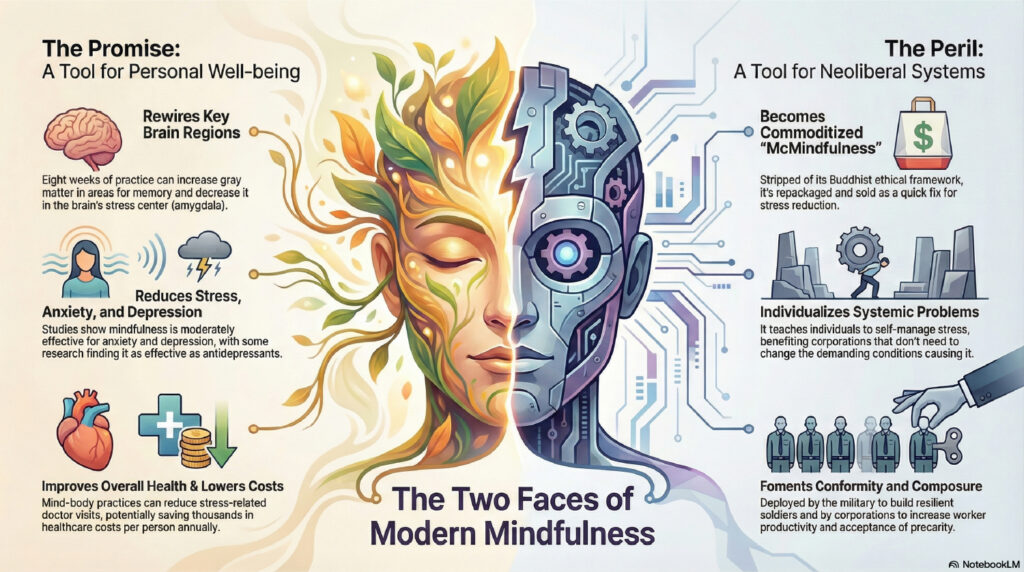
4.1 Structural Neuroplasticity: Gray Matter Density
Long-term mindfulness practice, and even 8-week interventions, have been associated with increases in gray matter concentration in regions associated with learning, memory, and emotional regulation.
- Hippocampus: The hippocampus is critical for contextualizing memory and regulating the stress response (via negative feedback to the HPA axis). Chronic stress is known to cause hippocampal atrophy. Conversely, mindfulness training has been linked to increased gray matter density in the hippocampus.13 This structural fortification may explain the reduced vulnerability to stress and improved cognitive function observed in meditators.
- Prefrontal Cortex (PFC): The PFC, particularly the dorsolateral prefrontal cortex (DLPFC) and the orbitofrontal cortex (OFC), is the executive center of the brain. Studies consistently show increased cortical thickness in these regions among meditators.15 The DLPFC is involved in “top-down” regulation, allowing for the modulation of emotional responses initiated by lower brain centers.
- Amygdala: In contrast to the growth seen in the PFC and hippocampus, the amygdala—the brain’s “threat detection center”—often shows decreased gray matter volume and functional reactivity following mindfulness training.13 Importantly, this reduction in amygdala volume has been shown to correlate directly with reductions in perceived stress, providing a biological validation of subjective reports.
4.2 Network Neuroscience: The Shifting of States
Beyond specific regions, mindfulness is best understood through the lens of large-scale brain networks. The practice appears to enhance the brain’s ability to switch between three critical networks:
Table 1: Brain Networks and Mindfulness Modulation
| Network | Primary Function | Effect of Mindfulness Training | Implications |
| Default Mode Network (DMN) | Active during rest, mind-wandering, self-referential thinking (“me” thoughts), and rumination. Anchored by the Posterior Cingulate Cortex (PFC) and medial PFC. | Downregulation / Deactivation. Experienced meditators show reduced DMN activity during practice and at rest.17 | Reduced depressive rumination; less getting “stuck” in negative self-narratives. |
| Salience Network (SN) | Detects behaviourally relevant stimuli (internal/external) and coordinates switching between DMN and CEN. Anchored by the Insula and Anterior Cingulate Cortex (ACC). | Enhanced Connectivity & Efficiency. Increased functional connectivity between the SN and other networks.19 | Improved interoception (body awareness); faster detection of mind-wandering; better emotional regulation. |
| Central Executive Network (CEN) | Engaged in higher-order cognitive tasks, working memory, and focused attention. Anchored by the DLPFC. | Activation. FA practices specifically recruit the CEN to maintain focus.21 | Improved sustained attention; better cognitive performance and working memory. |
4.3 The Amygdala-PFC Functional Coupling
One of the most robust findings in the neuroscience of emotion regulation is the inverse relationship between the Prefrontal Cortex and the Amygdala. In anxiety and PTSD, this relationship is often dysregulated—the “alarm” (amygdala) rings loudly, and the “brake” (PFC) is weak or disconnected.
Mindfulness training strengthens the functional connectivity between the PFC (specifically the ventromedial PFC) and the amygdala.16 This enhanced coupling allows for more effective “top-down” regulation. When a negative emotion arises, the mindful brain can engage the PFC to observe and regulate the amygdala’s response, rather than being hijacked by it. This mechanism explains why mindfulness is effective for anxiety disorders: it does not necessarily stop the initial spark of fear, but it prevents it from becoming a wildfire of panic.
4.4 The Insula and Interoception
The insula is the primary cortical hub for interoception—the sensing of the physiological state of the body (heartbeat, breath, gut sensations). Research indicates that mindfulness training leads to increased activity and cortical thickness in the anterior insula.13 This is clinically significant because emotional awareness is grounded in bodily awareness. By enhancing insular function, mindfulness allows individuals to detect the somatic precursors of emotion (e.g., a tightening chest signaling anxiety) earlier in the process. This “early warning system” provides a larger window of opportunity for regulation before an emotional reaction becomes automatic and overwhelming.22
5. Psychoneuroimmunology and Epigenetics: The Cellular Impact
The effects of mindfulness extend beyond the central nervous system to the peripheral nervous system and the genomic machinery of the cell. This field, known as psychoneuroimmunology, investigates how mental states influence immune and endocrine function.
5.1 The HPA Axis and Cortisol
The Hypothalamic-Pituitary-Adrenal (HPA) axis is the body’s primary stress response system. Chronic activation leads to the sustained release of cortisol, which is neurotoxic and immunosuppressive. Mindfulness interventions have been shown to dampen HPA axis hyperactivity.
- Cortisol Reduction: A meta-analysis of MBIs found significant reductions in stress biomarkers. In one study involving hypertensive populations, the intervention group showed an 88.8% reduction in the risk of worsening hair cortisol levels compared to controls.23
- Pro-inflammatory Cytokines: Chronic stress elevates pro-inflammatory cytokines like Interleukin-6 (IL-6) and C-reactive protein (CRP), which are implicated in heart disease and depression. MBSR has been shown to reduce these markers.24 Specifically, studies have noted reductions in NF-κB, a protein complex that controls the transcription of DNA and cytokine production.
5.2 Epigenetics: Changing Gene Expression
Perhaps the most revolutionary finding is that mindfulness can alter gene expression—not changing the DNA sequence itself, but turning genes “on” or “off.”
- Rapid Genomic Response: A landmark study by Kaliman et al. demonstrated that after just one day of intensive mindfulness practice, experienced meditators showed a downregulation of histone deacetylase genes (HDAC2, HDAC3, HDAC9) and pro-inflammatory genes (RIPK2, COX2).26
- Mechanism: HDACs are enzymes that remove acetyl groups from histones, typically silencing gene expression. Their downregulation suggests a mechanism by which mindfulness rapidly reduces the expression of genes involved in inflammation. This implies that the “calmness” of the mind can physically alter the molecular readout of the genome, providing a rapid biological basis for the anti-inflammatory effects of meditation.27
5.3 Telomeres and Cellular Aging
Telomeres are the protective nucleotide caps at the ends of chromosomes. They shorten with cell division and oxidative stress, serving as a biological clock for cellular aging. Shortened telomeres are associated with cardiovascular disease, diabetes, and early mortality.
- Telomerase Activity: Research suggests that mindfulness may increase the activity of telomerase, the enzyme responsible for rebuilding telomeres.28 A study comparing meditators to non-meditators found that the meditators had higher expression of the hTERT and hTR genes (components of telomerase) and lower methylation of the hTERT promoter region, leading to greater telomere stability.29
- Clinical implication: While definitive conclusions require longitudinal data, these findings offer tentative support for the hypothesis that mindfulness practice could slow the rate of cellular aging by mitigating the biochemical ravages of stress.28
6. Clinical Applications: Mental Health Efficacy
The application of mindfulness to psychopathology is the most developed area of research. Meta-analyses generally support its efficacy, though with important caveats regarding active controls.
6.1 Depression and Relapse Prevention
Mindfulness-Based Cognitive Therapy (MBCT) is the gold standard intervention for depression relapse prevention. It was specifically designed to target rumination—the repetitive, passive focus on symptoms of distress.
- Mechanism: MBCT teaches “decentering,” or viewing thoughts as passing mental events rather than facts. This breaks the associative link between dysphoric mood and negative self-thinking.4
- Efficacy: Meta-analyses have consistently shown that MBCT is as effective as maintenance antidepressant medication in preventing relapse for individuals with three or more prior depressive episodes.31 It reduces the risk of relapse by approximately 43% compared to usual care.
- Acute Depression: For active acute depression, results are more mixed. Some meta-analyses show no significant advantage over other active therapies (like CBT), suggesting that mindfulness is best utilized as a prophylactic or maintenance tool rather than a monotherapy for acute crisis.31
6.2 Anxiety Disorders
Mindfulness-Based Stress Reduction (MBSR) has been extensively studied for anxiety.
- Outcomes: Meta-analyses indicate small-to-moderate effect sizes for anxiety reduction.33 It is particularly effective for Generalized Anxiety Disorder (GAD) and high-trait anxiety populations.
- Comparison to Muscle Relaxation: When compared to Progressive Muscle Relaxation (PMR)—an active control—the superiority of mindfulness is less consistent. Some studies show mindfulness is superior at 12-month follow-up, while others show comparable immediate effects.34 This suggests that for anxiety, the non-specific effects of relaxation and physiological downregulation are significant components of the treatment effect, regardless of the “mindfulness” cognitive component.
6.3 ADHD and Cognitive Function
Given that mindfulness is essentially attention training, its application to ADHD is logical.
- Findings: Meta-analyses show that mindfulness interventions can reduce ADHD symptoms in adults, particularly inattention and hyperactivity.36
- Cognitive Domains: Research indicates consistent small-to-moderate improvements in global cognition, inhibition (impulse control), and sustained attention.37 However, effects on executive functioning latency (speed) and episodic memory are less robust. The practice appears to sharpen the “focus” and “brake” systems of the brain, but may not enhance processing speed.
6.4 Insomnia and Sleep Architecture
Mindfulness approaches to insomnia target the cognitive arousal (“I’ll never fall asleep”) that perpetuates the condition.
- Mechanisms: Mindfulness reduces pre-sleep cognitive arousal and somatic tension. The acceptance component is negatively correlated with the Insomnia Severity Index (ISI).38 By removing the “effort” to sleep, the parasympathetic nervous system can engage.
- Results: While mindfulness improves subjective sleep quality and reduces insomnia severity, objective measures (polysomnography) often show smaller changes in total sleep time compared to CBT-I (CBT for Insomnia), which remains the first-line treatment.38
7. Clinical Applications: Somatic Health
The mind-body connection allows mindfulness to influence physical disease states, primarily through stress reduction and pain modulation.
7.1 Chronic Pain Management
Chronic pain is a complex experience composed of sensory input (nociception) and emotional reaction (suffering). Mindfulness targets the latter.
- The Uncoupling Effect: fMRI studies demonstrate that while meditators may experience similar levels of sensory intensity to non-meditators, they report significantly less unpleasantness. This subjective reduction is mirrored by decreased activity in the prefrontal cortex (associated with evaluation) and increased activity in the insula (associated with sensation).17 They “feel” the sensation more fully but “judge” it less.
- Clinical Utility: MBSR is widely employed in pain clinics. While it may not eliminate the pain signal, it significantly reduces pain interference (disability) and the comorbid depression often associated with chronic pain conditions.40
7.2 Cardiovascular Health
Hypertension is often exacerbated by sympathetic nervous system overactivity.
- Blood Pressure: Meta-analyses have found that MBIs can significantly reduce systolic (SBP) and diastolic blood pressure (DBP). Reductions of -9.12 mmHg (SBP) and -5.66 mmHg (DBP) have been reported in pooled analyses of hypertensive populations.42
- Comparison: These reductions are clinically significant, comparable to lifestyle interventions like low-salt diets. However, out-of-office (ambulatory) BP measurements show less consistent reductions than in-office measurements, suggesting some situational variability.43
7.3 Natural Killer Cells and Immunity
The impact of mindfulness on the immune system is a promising but complex area.
- NK Activity: Natural Killer (NK) cells are vital for tumor surveillance and viral defense. Early studies suggested MBSR increases NK cell activity.44
- Nuance: More recent reviews and meta-analyses suggest that while there is a signal for immune enhancement, the results are often not statistically significant after rigorous correction for multiple comparisons.45 The effect appears strongest in populations under high stress (e.g., breast cancer patients), supporting the “stress-buffering” hypothesis of mindfulness—it restores immune function suppressed by stress but may not “supercharge” a healthy baseline.
8. Protocols, Dose-Response, and “How-To”
Translating the science into practice requires an understanding of protocols and dosage.
8.1 Evidence-Based Protocols
The research is largely based on specific, standardized curricula:
- MBSR (Mindfulness-Based Stress Reduction): 8 weeks, 2.5-hour weekly group sessions, one full-day retreat, and 45 minutes of daily home practice.
- MBCT (Mindfulness-Based Cognitive Therapy): Similar structure to MBSR but integrates CBT elements (identifying automatic negative thoughts) and focuses on depression relapse.46
8.2 The Dose-Response Debate
A critical question for the public is: “How much meditation is enough?”
- The 45-Minute Standard: The original MBSR protocol demands 45 minutes daily. This high dose was based on clinical intuition, not dose-ranging studies.47
- The “Minimum Effective Dose”: Research suggests that consistency outweighs duration. Studies show benefits with 10-20 minutes daily.47
- The 2025 Finding: A recent large-scale prospective study clarified this picture. While some benefits accrue early, meaningful improvements in mental health outcomes (distress, well-being) required 35-65 minutes of daily practice, and benefits for mood stability required even more.49 This finding challenges the “app-based” model of 5-minute meditations, suggesting that deep psychological change requires significant time investment, with a non-linear relationship between practice hours and outcome.51
8.3 Practical Techniques for Daily Life
Integration into daily life is essential for maintaining benefits.
The “STOP” Technique
This informal practice is designed to interrupt the stress response in real-time.11
| Step | Action | Mechanism |
| S (Stop) | Physically stop what you are doing. Put down the phone/tool. | Interrupts the automatic behavioral loop. |
| T (Take a Breath) | Take a deep, conscious breath. Focus on the physical sensation. | Activates the parasympathetic vagal brake; lowers heart rate. |
| O (Observe) | Scan the body for tension, the mind for thoughts, and the environment. | Engages the “observer self” (metacognition) and the Salience Network. |
| P (Proceed) | Ask: “What is most important right now?” Then act. | Shifts from reactive (amygdala) to responsive (prefrontal) mode. |
Mindful Eating
The “Raisin Exercise” is a cornerstone of MBSR, teaching the decoupling of sensory experience from automatic consumption.53 It involves:
- Visual: Examining the food as if an alien object.
- Tactile: Feeling texture and weight.
- Olfactory: Inhaling the scent.
- Gustatory: Placing it in the mouth without chewing, then chewing slowly to notice flavor release.
- Interoceptive: Feeling the swallow and the sensation of fullness.
This practice treats eating disorders and obesity by increasing sensitivity to satiety cues.
9. Critique, Risks, and Socio-Cultural Analysis
A comprehensive report must address the criticisms and potential risks of the mindfulness movement.
9.1 The “McMindfulness” Critique
The commercialization of mindfulness has drawn sharp criticism from scholars like Ronald Purser.55
- Decontextualization: The critique argues that corporate mindfulness programs strip the practice of its ethical roots (Sila) and social justice commitments. Instead of “Right Mindfulness” (which implies ethical discernment), it becomes “Bare Attention” used to increase productivity or compliance in toxic work environments.55
- Neoliberalism: Purser contends that “McMindfulness” privatizes stress, locating the problem inside the individual’s head rather than in systemic societal issues (e.g., overwork, inequality). It becomes a “capitalist spirituality” that pacifies resistance.56
- Counterpoint: Defenders argue that secular mindfulness serves as a “Trojan horse,” introducing people to contemplative practice who would otherwise never encounter it, potentially leading to deeper ethical development over time.57
9.2 The “Dark Side”: Adverse Effects
Mindfulness is not benign for everyone. The narrative that “it can’t hurt” is scientifically inaccurate.
- Prevalence: Large-scale cross-sectional studies indicate that approximately 25.4% of meditators report “unwanted effects” (UEs), including anxiety, panic, and depersonalization.58
- Severity: While most effects are transient, about 1.2% to 6% of practitioners report lasting impairments or adverse effects that require medical attention.58
- Mechanisms of Harm: Intensive focus on internal states can lead to relaxation-induced anxiety in prone individuals. For those with a history of dissociation, open monitoring can exacerbate the feeling of unreality.
9.3 Trauma-Sensitive Mindfulness (TSM)
For trauma survivors, standard mindfulness instructions (e.g., “close your eyes and pay attention to your body”) can be triggering. Trauma is often stored somatically; focusing on the body can induce flashbacks or hyperarousal.61
- Modifications: TSM, developed by David Treleaven, modifies the practice to ensure safety 62:
- Eyes Open: To maintain orientation in the present environment.
- External Anchors: Focusing on a sound or a visual object rather than the breath (which can be a trigger if associated with suffocation or panic).
- Choice: Emphasizing the agency to stop or move at any time.
- Titration: Approaching difficult sensations in small, manageable doses.
10. Methodological Landscape and Limitations
The scientific rigor of mindfulness research has improved but remains subject to limitations that affect the interpretation of efficacy.
10.1 The Active Control Problem
Many studies showing positive results compare mindfulness to a “waitlist control” (doing nothing).
- The Issue: This design does not control for the “non-specific factors” of therapy: group support, instructor attention, and positive expectancy (placebo).64
- Active Comparison: When mindfulness is compared to active controls (e.g., Health Enhancement Programs, exercise, or muscle relaxation), the effect sizes often shrink or become non-significant.31
- Implication: This suggests that some of the benefit comes from the generic structure of the intervention, not necessarily the unique mechanism of “mindfulness” itself. However, mindfulness often performs as well as these active treatments, validating it as a legitimate therapeutic option.
10.2 Self-Selection and Publication Bias
Participants in mindfulness trials are often self-selected (interested in meditation), leading to high motivation and expectancy effects. Furthermore, positive results are more likely to be published than null results, potentially inflating the overall perception of efficacy in the literature.66
11. Conclusion: The Path Forward
Mindfulness has traversed a remarkable path from the forests of ancient India to the MRI scanners of the Ivy League. The evidence base, while imperfect, is compelling. It demonstrates that the intentional cultivation of non-judgmental awareness can rewire the brain’s regulatory networks, dampen the physiological stress response, and provide relief for a wide range of psychological and somatic conditions.
However, mindfulness is not a panacea. It is a dose-dependent skill that requires effort and consistency. Its efficacy is comparable to, but not necessarily superior to, other robust interventions like CBT or exercise. It carries risks, particularly for the trauma-exposed, and its commercialization raises valid ethical questions about the purpose of the practice.
The future of mindfulness lies in precision medicine—moving beyond the “one-size-fits-all” 8-week MBSR model to tailored interventions. It lies in dismantling studies that clarify which components (focus vs. acceptance) work for which patients. And it lies in a return to the ethical context, acknowledging that true well-being is not just a private internal state, but a relational capacity to live wisely in the world.
Appendix: Summary Tables
Table 2: Comparative Efficacy by Condition (Meta-Analysis Summary)
| Condition | Strength of Evidence | Key Findings |
| Depression Relapse | High | Equal to antidepressants; 43% risk reduction.31 |
| Anxiety | Moderate | Moderate effect size; comparable to other relaxation therapies.33 |
| Chronic Pain | Moderate | Reduces “suffering” and disability more than pain intensity.40 |
| Addiction | Low/Moderate | Shows promise for craving reduction; more research needed.4 |
| Hypertension | Moderate | Significant reduction in SBP/DBP; comparable to lifestyle changes.42 |
| Sleep/Insomnia | Moderate | Improves subjective quality; less effect on objective sleep duration.38 |
Table 3: Molecular & Cellular Biomarkers
| Biomarker | Effect of Mindfulness | Source |
| Cortisol | Reduction in hair and serum levels (up to 88% risk reduction of worsening). | 23 |
| Pro-inflammatory Genes | Downregulation of RIPK2, COX2. | 26 |
| HDACs | Downregulation of Histone Deacetylases (rapid epigenetic change). | 27 |
| Telomerase | Increased activity (hTERT expression). | 28 |
| NF-κB | Reduced activity (central driver of inflammation). | 24 |
Works cited
- Mindfulness – Wikipedia, accessed January 5, 2026, https://en.wikipedia.org/wiki/Mindfulness
- Mindfulness meditation and the immune system: a systematic review of randomized controlled trials – Semel Institute for Neuroscience and Human Behavior, accessed January 5, 2026, https://teams.semel.ucla.edu/sites/default/files/publications/Mindfulness%20meditation%20and%20the%20immune%20system.pdf
- Mindfulness History and Research — My Best Self 101, accessed January 5, 2026, https://www.mybestself101.org/mindfulness-history-and-research
- Sakshi and Dhyana: the origin of mindfulness-based therapies – PMC – PubMed Central, accessed January 5, 2026, https://pmc.ncbi.nlm.nih.gov/articles/PMC10063990/
- The History and Origins of Mindfulness – PositivePsychology.com, accessed January 5, 2026, https://positivepsychology.com/history-of-mindfulness/
- History of Mindfulness: From East to West and From Religion to Science, accessed January 5, 2026, https://breathwork-science.org/2018/12/03/history-of-mindfulness-from-east-to-west-and-from-religion-to-science/
- Dismantling Mindfulness-Based Programs: A Systematic Review to Identify Active Components of Treatment – PubMed Central, accessed January 5, 2026, https://pmc.ncbi.nlm.nih.gov/articles/PMC9937445/
- Researchers ‘dismantle’ mindfulness intervention to see how each component works, accessed January 5, 2026, https://www.brown.edu/news/2017-12-04/dismantling
- Formal vs. Informal Mindfulness: 2 Ways to Practice, accessed January 5, 2026, https://www.mindful.org/formal-vs-informal-mindfulness-2-ways-to-practice/
- Five Mindfulness Exercises You Can Easily Integrate Into Your Routine – McGill University, accessed January 5, 2026, https://www.mcgill.ca/continuingstudies/article/5-mindfulness-exercises-you-can-easily-integrate-your-routine
- accessed January 5, 2026, https://cogbtherapy.com/mindfulness-meditation-blog/mindfulness-stop-skill#:~:text=The%20acronym%20STOP%20stands%20for,thoughtful%2C%20effective%20decision%2Dmaking.
- The importance of formal versus informal mindfulness practice for enhancing psychological wellbeing and study engagement in a medical student cohort with a 5-week mindfulness-based lifestyle program | PLOS One, accessed January 5, 2026, https://journals.plos.org/plosone/article?id=10.1371/journal.pone.0258999
- Neural mechanisms of mindfulness and meditation: Evidence from neuroimaging studies – PMC – PubMed Central, accessed January 5, 2026, https://pmc.ncbi.nlm.nih.gov/articles/PMC4109098/
- Neuroscience of Mindfulness Meditation – Wharton Neuroscience Initiative – University of Pennsylvania, accessed January 5, 2026, https://neuro.wharton.upenn.edu/community/winss_scholar_blog2/
- The Cognitive Neuroscience in Mindfulness Meditation – BrainFacts, accessed January 5, 2026, https://www.brainfacts.org/diseases-and-disorders/mental-health/2024/the-cognitive-neuroscience-in-mindfulness-meditation-010424
- accessed January 5, 2026, https://www.frontiersin.org/journals/psychology/articles/10.3389/fpsyg.2021.659403/full#:~:text=Moreover%2C%20it%20has%20been%20found,et%20al.%2C%202018).
- Neurobiological Changes Induced by Mindfulness and Meditation: A Systematic Review, accessed January 5, 2026, https://pmc.ncbi.nlm.nih.gov/articles/PMC11591838/
- Neurofeedback mindfulness alters brain connectivity without psychological change, accessed January 5, 2026, https://goamra.org/news/13437649
- Mindfulness-based therapy improves brain functional network reconfiguration efficiency, accessed January 5, 2026, https://pmc.ncbi.nlm.nih.gov/articles/PMC10640625/
- Mindfulness is associated with intrinsic functional connectivity between default mode and salience networks – PMC, accessed January 5, 2026, https://pmc.ncbi.nlm.nih.gov/articles/PMC4548211/
- From State-to-Trait Meditation: Reconfiguration of Central Executive and Default Mode Networks | eNeuro, accessed January 5, 2026, https://www.eneuro.org/content/6/6/ENEURO.0335-18.2019
- Functional Connectivity of Prefrontal Cortex in Various Meditation Techniques – A Mini-Review – PMC – PubMed Central, accessed January 5, 2026, https://pmc.ncbi.nlm.nih.gov/articles/PMC10026337/
- Mindfulness Practice Reduces Hair Cortisol, Anxiety and Perceived Stress in University Workers: Randomized Clinical Trial – PMC – NIH, accessed January 5, 2026, https://pmc.ncbi.nlm.nih.gov/articles/PMC10648523/
- Mindfulness and Meditation: Effects on Mental Health and Immunity – Immunize Nevada, accessed January 5, 2026, https://immunizenevada.org/mindfulness-and-meditation-effects-on-mental-health-and-immunity/
- The impact of guided meditations and mindfulness on blood pressure regulation: analyzing the physiological impact of mental health techniques on cardiac biomarkers – PMC – NIH, accessed January 5, 2026, https://pmc.ncbi.nlm.nih.gov/articles/PMC12442586/
- Changes Induced by Mind–Body Intervention Including Epigenetic Marks and Its Effects on Diabetes – MDPI, accessed January 5, 2026, https://www.mdpi.com/1422-0067/22/3/1317
- Study reveals gene expression changes with meditation – UW–Madison News, accessed January 5, 2026, https://news.wisc.edu/study-reveals-gene-expression-changes-with-meditation/
- Meditation and telomere length: a meta-analysis – PubMed, accessed January 5, 2026, https://pubmed.ncbi.nlm.nih.gov/31903785/
- Associations of meditation with telomere dynamics: a case–control study in healthy adults, accessed January 5, 2026, https://www.frontiersin.org/journals/psychology/articles/10.3389/fpsyg.2023.1222863/full
- Can meditation slow rate of cellular aging? Cognitive stress, mindfulness, and telomeres – PMC, accessed January 5, 2026, https://pmc.ncbi.nlm.nih.gov/articles/PMC3057175/
- Mindfulness in Mental Health and Psychiatric Disorders of Children and Adolescents: A Systematic Review and Meta-Analysis of Randomized Controlled Trials – MDPI, accessed January 5, 2026, https://www.mdpi.com/2036-7503/17/3/59
- Has the science of mindfulness lost its mind? – PMC, accessed January 5, 2026, https://pmc.ncbi.nlm.nih.gov/articles/PMC5353526/
- Effect of mindfulness-based interventions on anxiety, depression, and stress in patients with coronary artery disease: a systematic review and meta-analysis of randomized controlled trials – Frontiers, accessed January 5, 2026, https://www.frontiersin.org/journals/psychology/articles/10.3389/fpsyg.2024.1435243/full
- A Perspective on the Similarities and Differences Between Mindfulness and Relaxation – PMC – NIH, accessed January 5, 2026, https://pmc.ncbi.nlm.nih.gov/articles/PMC7003166/
- Meditation techniques v. relaxation therapies when treating anxiety: a meta-analytic review | Psychological Medicine – Cambridge University Press & Assessment, accessed January 5, 2026, https://www.cambridge.org/core/journals/psychological-medicine/article/meditation-techniques-v-relaxation-therapies-when-treating-anxiety-a-metaanalytic-review/6F167C7F5B2A00CB2039C05E89F6E5C2
- Meta-analysis finds mindfulness-based interventions reduce ADHD symptoms in adults, but no better than active psychological controls, accessed January 5, 2026, https://www.adhdevidence.org/blog/meta-analysis-finds-mindfulness-based-interventions-reduce-adhd-symptoms-in-adults-but-no-better-than-active-psychological-controls
- Mindfulness Enhances Cognitive Functioning: A Meta-Analysis of 111 Randomized Controlled Trials – PMC – PubMed Central, accessed January 5, 2026, https://pmc.ncbi.nlm.nih.gov/articles/PMC10902202/
- You Are at Risk of Insomnia When You Do Not Accept Your Pre-Sleep Arousal: A Cross-Sectional Study Investigating the Relationship Between Mindfulness, Pre-Sleep Arousal and Severity of Insomnia Symptoms – MDPI, accessed January 5, 2026, https://www.mdpi.com/2076-3425/15/11/1196
- Improving Sleep with Mindfulness and Acceptance: A Metacognitive Model of Insomnia, accessed January 5, 2026, https://pmc.ncbi.nlm.nih.gov/articles/PMC3466342/
- Use mindfulness to cope with chronic pain – Mayo Clinic Health System, accessed January 5, 2026, https://www.mayoclinichealthsystem.org/hometown-health/speaking-of-health/use-mindfulness-to-cope-with-chronic-pain
- Mindfulness meditation and the immune system: a systematic review of randomized controlled trials – PMC – PubMed Central, accessed January 5, 2026, https://pmc.ncbi.nlm.nih.gov/articles/PMC4940234/
- Effect of mindfulness-based interventions on people with prehypertension or hypertension: a systematic review and meta-analysis of randomized controlled trials – NIH, accessed January 5, 2026, https://pmc.ncbi.nlm.nih.gov/articles/PMC10865530/
- Effect and Acceptability of Mindfulness-Based Stress Reduction Program on Patients With Elevated Blood Pressure or Hypertension – American Heart Association Journals, accessed January 5, 2026, https://www.ahajournals.org/doi/10.1161/HYPERTENSIONAHA.120.16160
- Enhanced Psychosocial Well-Being Following Participation in a Mindfulness-Based Stress Reduction Program Is Associated with Increased Natural Killer Cell Activity – PubMed Central, accessed January 5, 2026, https://pmc.ncbi.nlm.nih.gov/articles/PMC2921566/
- Accepted version (220.35 KB) – University of Cambridge, accessed January 5, 2026, https://www.repository.cam.ac.uk/bitstreams/7b835ae7-9453-4bf8-b9a2-1f5c975c40a2/download
- Effects of Mindfulness Meditation Duration and Type on Well-being: an Online Dose-Ranging Randomized Controlled Trial – PMC – NIH, accessed January 5, 2026, https://pmc.ncbi.nlm.nih.gov/articles/PMC10090715/
- How Long Should You Meditate? – Verywell Mind, accessed January 5, 2026, https://www.verywellmind.com/how-long-should-you-meditate-5208166
- How long should you meditate? — By Paul Greene, Ph.D. – Manhattan Center for Cognitive Behavioral Therapy, accessed January 5, 2026, https://manhattancbt.com/how-long-should-you-meditate/
- Dose–response effects of reported meditation practice on mental‐health and wellbeing: A prospective longitudinal study – NIH, accessed January 5, 2026, https://pmc.ncbi.nlm.nih.gov/articles/PMC12336962/
- (PDF) Dose-response effects of reported meditation practice on mental-health and wellbeing: A prospective longitudinal study – ResearchGate, accessed January 5, 2026, https://www.researchgate.net/publication/394432964_Dose-response_effects_of_reported_meditation_practice_on_mental-health_and_wellbeing_A_prospective_longitudinal_study
- Dose-response Relationship of Reported Lifetime Meditation Practice with Mental Health and Wellbeing: a Cross-sectional Study – PubMed, accessed January 5, 2026, https://pubmed.ncbi.nlm.nih.gov/36193220/
- Feeling anxious? Try the STOP technique for a quick reset — Calm Blog, accessed January 5, 2026, https://www.calm.com/blog/stop-technique
- EATING WITH MINDFULNESS | NYC.gov, accessed January 5, 2026, https://www.nyc.gov/assets/olr/downloads/pdf/wellness/nutrition/eatingwithmindulness.pdf
- Mindful Eating Practice Exercise – JMU, accessed January 5, 2026, https://www.jmu.edu/counselingctr/self-help/eating_issues/mindful-eating.shtml
- Book Summary: McMindfulness by Ronald Purser – To Summarise, accessed January 5, 2026, https://www.tosummarise.com/book-summary-mcmindfulness-by-ronald-purser/
- McMindfulness: How Mindfulness Became the New Capitalist Spirituality, accessed January 5, 2026, https://www.psychotherapy.net/article/mcmindfulness-how-mindfulness-became-new-capitalist-spirituality
- Mindfulness at Work is Not Mind Control – Greater Good Science Center, accessed January 5, 2026, https://greatergood.berkeley.edu/article/item/mindfulness_at_work_is_not_mind_control
- Doing no harm in mindfulness-based programs: Conceptual issues and empirical findings, accessed January 5, 2026, https://pmc.ncbi.nlm.nih.gov/articles/PMC6575147/
- Prevalence, predictors and types of unpleasant and adverse effects of meditation in regular meditators: international cross-sectional study | BJPsych Open, accessed January 5, 2026, https://www.cambridge.org/core/journals/bjpsych-open/article/prevalence-predictors-and-types-of-unpleasant-and-adverse-effects-of-meditation-in-regular-meditators-international-crosssectional-study/81E6E9CF2FEE32BC8E97AE9853FD13BC
- Staying Healthy: Meditation Can Have Adverse Effects – AllCare Health, accessed January 5, 2026, https://www.allcarehealth.com/articles-events/articles/staying-healthy-meditation-can-have-adverse-effects
- Trauma-Informed Mindfulness: Benefits, Risks, and Getting Started – Psych Central, accessed January 5, 2026, https://psychcentral.com/health/trauma-informed-mindfulness
- 10 Resources for How to Teach Trauma-Sensitive Mindfulness, accessed January 5, 2026, https://mindfulnessexercises.com/10-resources-for-how-to-teach-trauma-sensitive-mindfulness/
- 8 Tips and Scripts for Trauma-Informed Mindfulness Teaching – Mindful.org, accessed January 5, 2026, https://www.mindful.org/8-tips-and-scripts-for-trauma-informed-mindfulness-teaching/
- SELECTING IDEAL CONTROL GROUPS IN MEDITATION RANDOMIZED CONTROLLED TRIALS – PMC – NIH, accessed January 5, 2026, https://pmc.ncbi.nlm.nih.gov/articles/PMC4704443/
- Effects of mindfulness meditation combined with progressive muscle relaxation on sleep disorders, anxiety, and depression in patients with sarcopenia undergoing hemodialysis – Frontiers, accessed January 5, 2026, https://www.frontiersin.org/journals/psychiatry/articles/10.3389/fpsyt.2025.1542028/full
Mindfulness Meditation Often Fails the Scientific Test – McGill University, accessed January 5, 2026, https://www.mcgill.ca/oss/article/critical-thinking-health-and-nutrition/mindfulness-meditation-often-fails-scientific-test