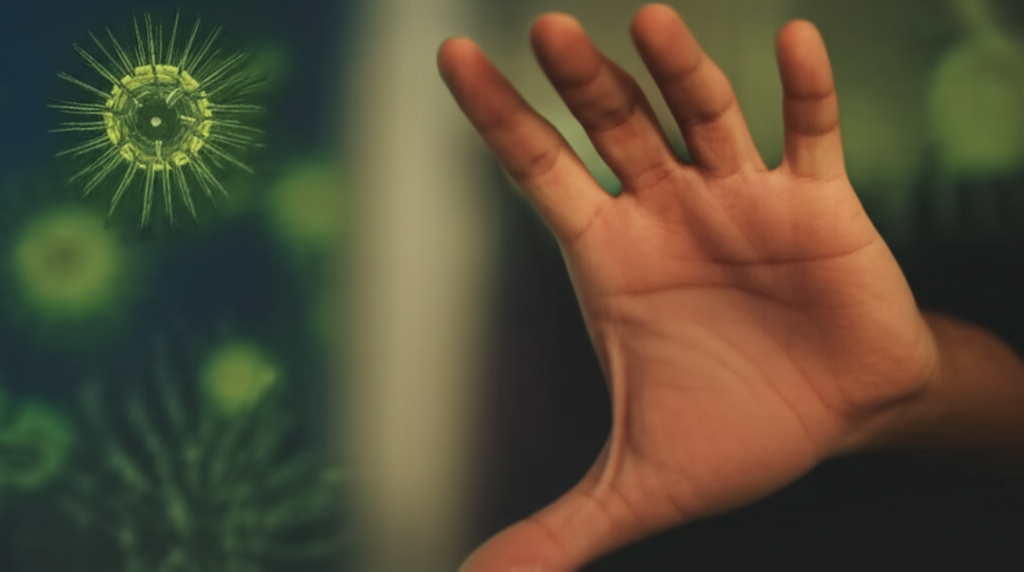
The Genesis of Disgust: An Evolutionary Sentinel Against Disease
The most widely accepted theory for the origin of disgust is the disease-avoidance hypothesis. At its core, this theory posits that disgust evolved as a frontline defense mechanism to prevent contact with pathogens and parasites. Our ancestors lived in a world rife with invisible dangers—bacteria, viruses, and toxins that could cause sickness and death. Lacking microscopes and germ theory, they needed an intuitive system to identify and avoid these threats. Disgust was the answer.
This primal emotion acts as a powerful motivator, creating a strong aversion to things that are likely to carry disease. It is an instinctual 'yuck' factor that bypasses conscious thought, triggering an immediate withdrawal response long before our physiological immune system is ever challenged.
The Core Domains of Disgust
Psychologist Paul Rozin, a leading researcher in the field, identified several core domains where disgust is most potently triggered. These domains highlight its primary function as a protector.
-
Pathogen Disgust: This is the most fundamental and universally recognized form of disgust. It is triggered by stimuli directly associated with disease transmission. Key triggers include:
- Spoiled Food: The smell, sight, and texture of rotting meat or molding produce signal the presence of harmful bacteria.
- Bodily Products: Feces, vomit, blood, and pus are potent carriers of pathogens, and our intense disgust towards them is a direct protective measure.
- Certain Animals: Creatures like rats, flies, and cockroaches are often associated with filth and disease, earning them the status of universal disgust-elicitors.
- Poor Hygiene: A visible lack of cleanliness in others signals a higher risk of pathogen exposure, prompting us to keep our distance.
-
Sexual Disgust: Evolution is fundamentally about successful reproduction. Sexual disgust evolved to help us avoid mating choices that would be genetically costly. Its primary target is incest, a behavior that significantly increases the risk of genetic abnormalities in offspring. This form of disgust creates a powerful, innate aversion to sexual contact with close relatives.
-
Moral Disgust: This is where the evolution of disgust becomes truly fascinating. The primal, visceral circuitry of pathogen disgust appears to have been co-opted or extended to the social world. Moral disgust is triggered not by physical contaminants, but by social and ethical transgressions. Acts of betrayal, hypocrisy, cruelty, and profound injustice can evoke the same nose-wrinkling revulsion as spoiled food. This adaptation helps enforce social norms, punish violators, and maintain group cohesion, effectively 'quarantining' individuals who threaten the social fabric.
The Behavioral Immune System in Action
Think of disgust as the psychological arm of your immune system. While your physiological immune system fights off infections that have already entered your body, the behavioral immune system is proactive. It's a suite of psychological mechanisms that encourages you to avoid contact with pathogens in the first place. Disgust is its chief motivating officer.
How Disgust Shapes Our Daily Lives
The influence of this behavioral immune system is woven into the fabric of our daily existence, often in ways we barely notice.
-
Food Choices and Aversions: Disgust is the ultimate gatekeeper for what we consider edible. It's why we meticulously check expiration dates and sniff leftovers before eating them. It also underlies food neophobia, the wariness of trying new and unfamiliar foods. For our ancestors, an unknown plant or animal could be poisonous, and a cautious, disgust-tinged approach was a smart survival strategy. This also explains vast cultural differences in cuisine; foods considered delicacies in one culture (e.g., fermented fish, insects, pungent cheeses) can be utterly disgusting to another.
-
Hygiene Rituals: Modern hygiene practices are, in essence, institutionalized disgust responses. The acts of washing our hands, sanitizing surfaces, properly disposing of waste, and showering regularly are all behaviors driven by an underlying desire to remove or avoid disgusting contaminants. These rituals are a testament to the success of our evolved disgust sensitivity.
-
Social Avoidance: Our disgust mechanism makes us naturally wary of individuals who appear sick. Visible symptoms like open sores, coughing, or an unhealthy appearance can trigger a mild disgust response, prompting us to maintain physical distance. This is an intuitive form of social distancing that predates any modern understanding of epidemiology.
The Neurobiology of Disgust: The Brain's Warning Bell
The feeling of disgust isn't just an abstract concept; it has a clear biological basis in the brain. The primary hub for processing disgust is a region called the anterior insula (or insular cortex). This remarkable brain area is perfectly positioned to act as a warning bell. It receives input about foul tastes and smells from our sensory organs and integrates this information with our internal bodily state.
When you taste something rotten, the insula lights up, simultaneously processing the bad taste and generating the unpleasant emotional feeling we label as 'disgust.' It effectively tags the sensory experience with a powerful negative emotion, ensuring we remember to avoid it in the future. The insula is also activated during experiences of moral disgust, reinforcing the link between the brain's pathogen-avoidance system and our social-moral judgments. Other areas, like the amygdala, help lock in the emotional memory, ensuring that the lesson sticks.
When Disgust Goes Awry: Clinical and Social Implications
While essential for survival, a miscalibrated or overactive disgust response can contribute to significant psychological distress and social problems.
Psychological Disorders
-
Obsessive-Compulsive Disorder (OCD): The link is strongest in contamination-focused OCD. Individuals with this condition experience an overwhelming and irrational sense of disgust toward everyday objects and situations. This hyperactive disgust response drives them to perform compulsive cleaning and avoidance rituals to neutralize the perceived threat.
-
Phobias: Many specific phobias are a mixture of fear and disgust. The intense aversion to spiders (arachnophobia), snakes (ophidiophobia), or injections (trypanophobia) is often fueled as much by revulsion at their appearance or perceived sliminess as by fear of harm.
The Dark Side of Moral Disgust: Prejudice and Dehumanization
Perhaps the most dangerous manifestation of disgust is its role in social conflict. Throughout history, moral disgust has been weaponized to create and police boundaries between 'us' and 'them.' By labeling an out-group as 'filthy,' 'impure,' 'vermin,' or 'a disease,' propagandists can trigger the primal pathogen-avoidance circuitry in others. This dehumanization makes it psychologically easier to ostracize, discriminate against, and commit violence against the targeted group. Once a group of people is perceived as disgusting contaminants rather than as fellow humans, moral inhibitions against harming them are dangerously lowered. Awareness of this manipulative tactic is crucial for resisting prejudice and fostering a more tolerant society.
The Enduring Legacy of a Primal Protector
Disgust is a profound and deeply ingrained part of the human experience. Born from the evolutionary imperative to avoid disease, it has grown from a simple guardian of the body into a complex arbiter of our food, our hygiene, our social norms, and even our moral compass. It operates largely beneath our conscious awareness, a silent protector steering us away from danger, both physical and social.
Understanding the evolutionary roots of disgust grants us a powerful lens through which to view our own behavior and the workings of our societies. It reveals the wisdom encoded in our most visceral reactions while also cautioning us about their potential for misuse. Disgust is a double-edged sword: a vital shield that ensures our survival and a potential weapon that can be used to divide us. By appreciating its ancient origins, we can better harness its protective benefits while vigilantly guarding against its capacity to cause harm.