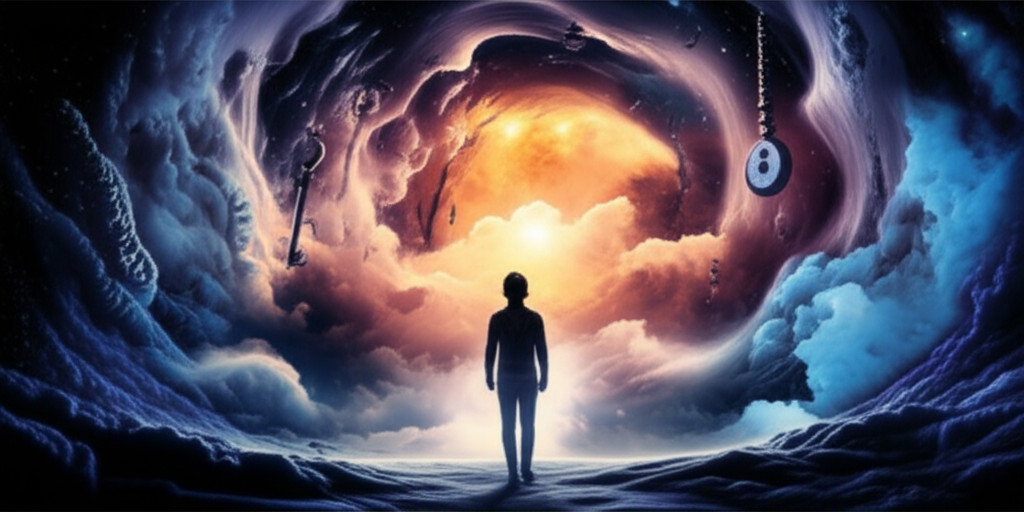
The Enigmatic World of Dreams: A Journey into the Psyche
Every night, we close our eyes and enter a world untethered from the laws of physics and logic. We fly, we fall, we meet strangers and converse with long-lost loved ones. Dreams are a universal human experience, yet they remain one of the most mysterious aspects of our consciousness. For centuries, cultures viewed them as divine messages or prophetic visions. Today, psychology offers a different lens—one that looks inward, suggesting that our dreams are a rich, symbolic language bubbling up from the depths of our own minds. This article will guide you through the fascinating psychological perspectives on dreams, from the groundbreaking theories of Freud and Jung to modern neuroscientific models, and provide you with the tools to start decoding the nightly narratives of your own subconscious.
The Psychoanalytic Founders: Unlocking the Unconscious
The scientific study of dreams truly began in the early 20th century, with two pioneers who believed that dreams were the ‘royal road to the unconscious.’ Their approaches, while related, offered distinct maps for navigating this hidden territory.
Sigmund Freud and Wish Fulfillment
In his seminal 1900 work, “The Interpretation of Dreams,” Sigmund Freud proposed a revolutionary theory: dreams are a form of wish fulfillment. He argued that they are the mind’s attempt to satisfy repressed urges, desires, and unresolved conflicts, often of a sexual or aggressive nature, that are deemed unacceptable by the conscious mind. According to Freud, every dream has two layers:
- Manifest Content: This is the actual storyline of the dream—the images, characters, and events you remember upon waking.
- Latent Content: This is the hidden, symbolic meaning of the dream, which represents the unconscious wishes.
The mind uses a process called “dream-work” to transform the disturbing latent content into the more palatable manifest content through mechanisms like symbolism (e.g., a key representing a solution) and displacement (transferring intense feelings onto a seemingly insignificant object). For Freud, analyzing these symbols was key to uncovering the patient’s deep-seated neuroses.
Carl Jung and the Collective Unconscious
Carl Jung, once a disciple of Freud, eventually broke away, believing his mentor’s focus on repressed sexuality was too narrow. Jung saw dreams not just as a repository of personal desires but as a tool for the psyche to communicate with the conscious self, striving for wholeness and balance—a process he called individuation. He agreed with the idea of a personal unconscious but expanded the map of the mind to include the collective unconscious: a shared, inherited reservoir of experiences and images from our human and pre-human ancestors. This shared knowledge manifests in dreams through archetypes—universal symbols and themes found across cultures.
- The Shadow: Represents the darker, repressed parts of our personality.
- The Anima/Animus: The feminine aspect in the male psyche and the masculine aspect in the female psyche.
- The Wise Old Man/Woman: Symbolizes wisdom, guidance, and knowledge.
For Jung, a dream about a fearsome monster wasn’t just a repressed desire; it might be a confrontation with one’s Shadow, an essential step toward self-acceptance and growth.
Modern Theories: Brain Science and Evolutionary Psychology
While psychoanalytic theories remain influential, modern psychology has leveraged neuroscience and evolutionary biology to offer alternative explanations for why we dream.
Activation-Synthesis Model
In the 1970s, neuroscientists J. Allan Hobson and Robert McCarley proposed a biological model. They suggested that during REM sleep, the brainstem sends random electrical signals (‘activation’) to the cortex—the part of the brain responsible for higher-level thinking. The cortex then attempts to weave these random signals into a coherent story (‘synthesis’). In this view, dreams are simply the brain’s attempt to make sense of chaotic neural static. While this theory explains the bizarre and illogical nature of many dreams, critics argue it doesn’t fully account for the complex, recurring, and emotionally resonant narratives that people often experience.
Information-Processing Theory
This cognitive perspective likens the brain to a computer. Dreams serve a function similar to memory consolidation, helping us sort, process, and file away the experiences and information from our waking day. They are a space to sift through memories, solidify learning, and even solve problems. Have you ever woken up with a solution to a problem that eluded you the day before? This theory suggests your dreaming mind was working on it overnight, strengthening neural connections related to the new information.
Threat Simulation Theory
From an evolutionary standpoint, Finnish neuroscientist Antti Revonsuo proposed that dreaming is a biological defense mechanism. He argues that our ancestral environment was filled with dangers, and dreams evolved to serve as a virtual reality simulator where we could rehearse threat perception and avoidance skills. This is why a disproportionate number of dreams are anxious or threatening (e.g., being chased, attacked, or falling). By practicing these scenarios in the safety of sleep, our ancestors were better prepared to face real dangers, increasing their chances of survival.
Common Dream Themes and Their Psychological Meanings
While dream interpretation is highly personal, certain themes appear so frequently across cultures that they likely tap into common human experiences and anxieties. Here are a few:
- Being Chased: This common anxiety dream often signifies that you are avoiding an issue or person in your waking life. The identity of the chaser—be it a monster, a person, or an unknown entity—can provide clues about what you are running from.
- Falling: Dreams of falling often correlate with feelings of insecurity, instability, or a lack of control in your life. It might relate to a situation at work, in a relationship, or financially where you feel overwhelmed and unsupported.
- Teeth Falling Out: One of the most common and distressing dreams, this often relates to anxiety about your appearance, communication issues, or a sense of powerlessness. You might feel you’ve said something you shouldn’t have or are worried about how others perceive you.
- Flying: In contrast to falling, flying dreams are usually positive, symbolizing feelings of freedom, liberation, and personal power. You may have recently overcome an obstacle or feel on top of the world.
- Being Unprepared for an Exam: Even decades after finishing school, many adults have this dream. It rarely has to do with actual academics. Instead, it reflects a fear of being judged, exposed, or failing to meet the expectations of others in your current life, often related to your career.
Disclaimer: These are general interpretations. The most important factor is your personal association with the symbols in your dream.
How to Become Your Own Dream Interpreter
You don’t need a psychologist to begin understanding your dreams. With practice and introspection, you can learn their language. Here’s how to start:
- Keep a Dream Journal: This is the most crucial step. Place a notebook and pen by your bed. The moment you wake up, write down everything you can remember, no matter how fragmented. Details fade incredibly fast. Note the plot, characters, setting, and especially the emotions you felt.
- Identify the Feeling: The emotional tone of a dream is a primary clue to its meaning. Did you feel scared, joyful, angry, or confused? The feeling is often more important than the literal story.
- Make Waking-Life Connections: Look for parallels between the dream’s content and your current life. Are you facing a big decision? Are you stressed about a project? The issues on your mind during the day are the raw material for your dreams at night.
- Analyze the Symbols Personally: Avoid generic ‘dream dictionaries.’ A symbol’s meaning is deeply personal. A dog might represent comfort and loyalty to one person but fear to another who was once bitten. Ask yourself, “What does this symbol mean to me?”
- Look for Patterns: Over time, your journal will reveal recurring themes, symbols, or narratives. These recurring dreams are often the most significant, pointing to unresolved conflicts, core aspects of your personality, or ongoing life challenges.
Conclusion: The Dialogue Within
From Freud’s hidden wishes to Jung’s quest for wholeness and modern science’s focus on brain function, the psychological exploration of dreams reveals a profound truth: dreaming is an active, meaningful process. Our dreams are not just random neural noise; they are a nightly conversation with ourselves. They are a space where our fears, hopes, memories, and creativity intertwine. By learning to listen to this inner dialogue, we don’t just solve a nightly riddle—we gain a deeper understanding of who we are. The journey to decode your dreams is, ultimately, a journey into the self.