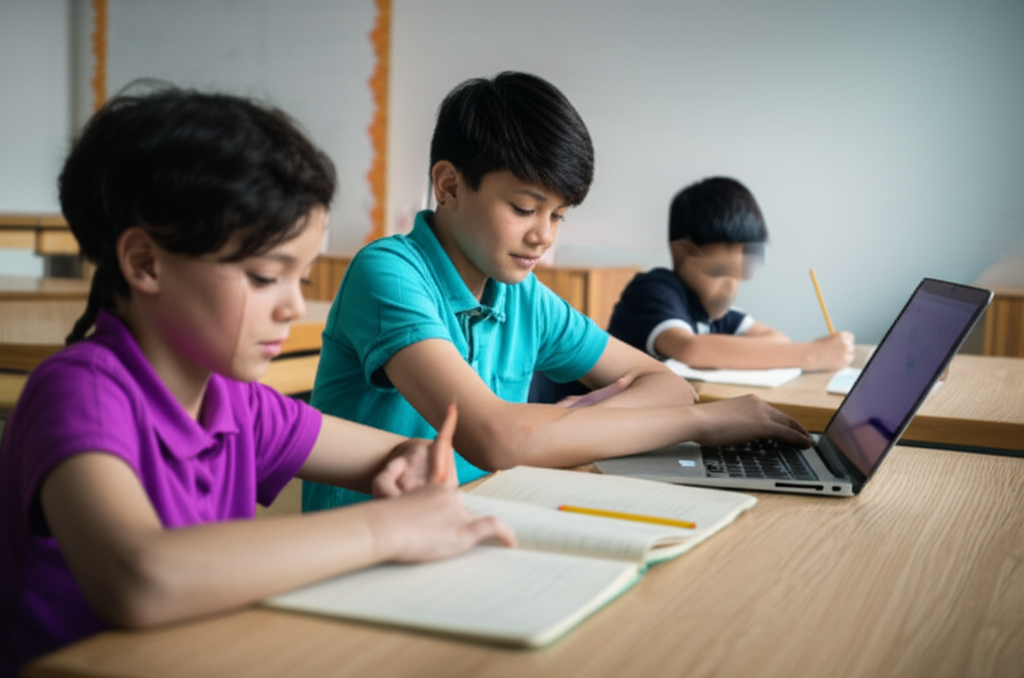
The End of One-Size-Fits-All: Embracing a New Era of Education
For centuries, the classroom has operated on a fundamental, yet flawed, premise: the one-size-fits-all model. A single teacher stands before dozens of students, delivering a standardized curriculum at a set pace. While this system has served its purpose, it inherently struggles to accommodate the diverse learning styles, paces, and interests of individual students. Some are left behind, struggling to keep up, while others grow bored, waiting for the class to catch on. But what if education could adapt to each student, just as a personal trainer designs a unique workout plan for each client? This is not a futuristic fantasy; it’s the reality being built today, powered by Artificial Intelligence (AI). The future of learning is here, and it is deeply personal.
AI is poised to be the most transformative technology in education since the invention of the printing press. By leveraging machine learning, data analytics, and natural language processing, AI offers the tools to deconstruct the rigid, industrial-era classroom and rebuild it as a dynamic, student-centric ecosystem. This article will explore the profound impact of AI on personalized learning, from the core technologies driving the change to the tangible benefits for students and educators, while also addressing the critical challenges we must navigate.
What is AI-Powered Personalized Learning?
Personalized learning is an educational approach that tailors instruction, curriculum, and learning environments to meet the unique needs and preferences of each student. The goal is to optimize engagement, understanding, and academic success. While the concept isn’t new, its practical implementation on a large scale has always been the primary hurdle. A single teacher simply cannot create 30 distinct lesson plans for every class.
This is where AI changes the game. AI-powered personalized learning uses sophisticated algorithms to collect and analyze vast amounts of data about a student’s interactions with learning material. This data includes everything from correct and incorrect answers to the time spent on a problem, concepts they revisit, and even the type of content they engage with most. AI then uses these insights to:
- Adapt in Real-Time: Adjust the difficulty and type of content presented to a student based on their current performance.
- Identify Knowledge Gaps: Pinpoint specific areas where a student is struggling and provide targeted remediation.
- Recommend Resources: Curate and suggest articles, videos, and exercises that align with a student’s learning style and interests.
- Provide Instant Feedback: Offer immediate, constructive feedback on assignments, allowing students to learn from their mistakes without delay.
Essentially, AI acts as an infinitely patient, data-driven co-pilot for both the student and the teacher, enabling a level of individualization that was previously unimaginable.
The Core Components of AI in Personalized Education
Several key AI technologies form the backbone of this educational revolution. Understanding these components helps demystify how AI translates data into a truly personalized experience.
Adaptive Learning Platforms
These are perhaps the most well-known applications of AI in education. Platforms like Khan Academy, DreamBox Learning, and Duolingo use algorithms to create a unique learning path for every user. If a student masters a concept in algebra, the system moves them to the next level. If they struggle, the platform provides simpler foundational exercises, explanatory videos, or different types of problems until the concept is grasped. This continuous loop of assessment and adaptation ensures students are always working within their Zone of Proximal Development—the sweet spot where learning is challenging but not overwhelming.
Intelligent Tutoring Systems (ITS)
An Intelligent Tutoring System is designed to simulate a one-on-one human tutor. Using natural language processing (NLP), an ITS can understand student questions posed in plain language and provide Socratic-style guidance, hints, and detailed explanations. Instead of just marking an answer as wrong, it can analyze the student’s process to identify the specific misconception that led to the error. This granular, interactive support helps build deeper conceptual understanding and critical thinking skills.
AI-Driven Content Creation and Curation
The creation of educational materials is a time-consuming task. AI is streamlining this process through platforms that can automatically generate quizzes, flashcards, and even lesson summaries from existing text or video content. Furthermore, AI algorithms can crawl the vast resources of the internet to curate the most relevant, high-quality, and age-appropriate content for a specific learning objective, saving educators countless hours of searching and vetting materials.
Predictive Analytics for Early Intervention
By analyzing patterns in student data—such as attendance, assignment completion rates, and platform engagement—AI can identify students who are at risk of falling behind or disengaging long before it becomes apparent in traditional assessments. These predictive models can flag at-risk students for educators, allowing for timely and targeted interventions. This shifts the teaching paradigm from reactive to proactive, ensuring every student gets the support they need to succeed.
The Transformative Benefits of Personalizing Education with AI
The shift toward AI-driven personalized learning offers profound benefits for everyone in the educational ecosystem.
For Students:
- Increased Engagement and Agency: When learning materials are relevant and pitched at the right level of difficulty, students are more engaged and motivated. They gain a sense of ownership over their education, transforming them from passive recipients to active participants.
- Improved Learning Outcomes: By targeting individual knowledge gaps and reinforcing concepts until they are mastered, AI helps ensure a more robust and lasting understanding, leading to better academic performance.
- Development of 21st-Century Skills: Personalized learning fosters self-direction, problem-solving, and metacognition—the ability to understand and regulate one’s own learning process. These are critical skills for lifelong success.
For Educators:
- Automation of Mundane Tasks: AI can automate the grading of quizzes and other routine administrative work, freeing up teachers’ valuable time.
- Actionable Insights: AI-powered dashboards provide educators with a holistic view of class-wide trends and deep insights into each student’s progress, strengths, and weaknesses.
- Focus on High-Impact Activities: With less time spent on grading and data entry, teachers can focus on what they do best: mentoring, facilitating group projects, providing one-on-one support, and fostering social-emotional learning.
Navigating the Challenges and Ethical Considerations
Despite its immense promise, the integration of AI in education is not without its challenges. It’s crucial to address these issues thoughtfully to ensure the technology is deployed equitably and responsibly.
Data Privacy and Security
Personalized learning systems collect a tremendous amount of sensitive data on minors. Ensuring this data is protected from breaches and used ethically is paramount. Clear policies on data ownership, consent, and usage are non-negotiable.
Algorithmic Bias
AI systems learn from the data they are trained on. If that data reflects existing societal biases (racial, socioeconomic, gender-based), the AI can perpetuate or even amplify those inequalities. For example, an algorithm could mistakenly associate a student’s dialect with a lack of understanding, disadvantaging them. Rigorous auditing and the use of diverse, representative datasets are essential to mitigate bias.
The Digital Divide
An over-reliance on AI-driven technology risks widening the gap between students who have access to high-speed internet and modern devices and those who do not. Ensuring equitable access is a fundamental prerequisite for the successful implementation of educational AI.
The Irreplaceable Role of the Human Teacher
It must be stressed that AI is a tool to augment, not replace, human teachers. Education is fundamentally a human endeavor. AI cannot replicate the empathy, mentorship, and inspiration a great teacher provides. The future classroom is not one of students staring at screens, but one where technology empowers teachers to forge stronger, more meaningful connections with their students.
Conclusion: A Collaborative Future for Learning
The future of learning is not about choosing between a human teacher and an AI algorithm. It’s about creating a powerful synergy between the two. AI provides the tools to personalize instruction at scale, catering to the individual needs of every learner in a way that has never been possible before. It can handle the data-crunching and content delivery, allowing educators to focus on the uniquely human aspects of teaching: fostering curiosity, building relationships, and nurturing well-rounded individuals.
By embracing the potential of AI while proactively addressing its challenges, we can move beyond the limitations of the one-size-fits-all model. We can build a future where every student has a personalized path to success, where learning is more engaging, effective, and equitable for all. The revolution is underway, and it promises to unlock the full potential of human learning.